Best Scuba BCD in 2026
The Mares Journey 3.0 at under $500 is the best BCD for most divers: back inflation for flatter trim, integrated weight pockets, and a packable build for travel. The Cressi Start Pro 2.0 at under $500 is the conventional jacket alternative, and the Scubapro Hydros Pro at under $1,000 is the travel and durability pick.
A BCD is the harness that holds your cylinder, carries your lead, and lets you sit motionless in mid water instead of swimming to stay level. It is the item that decides how a dive feels, more than any regulator does, because buoyancy control is what separates a diver from a person in water. For most divers the answer is the Mares Journey 3.0 at under $500, a light back inflation design with integrated weights that trims flat and packs into a suitcase.
A buoyancy compensator is an inflatable bladder in a harness, fed from a low pressure hose off your regulator first stage, which you add gas to and vent gas from so that your total buoyancy stays neutral as depth and cylinder pressure change. It is not a life jacket, and it is not what keeps you at a stop. Your lungs do the fine work; the BCD does the coarse work.
Best scuba BCDs by experience level

Cressi Start Pro 2.0 BCD
A conventional jacket with integrated weight pockets and enough padding to be comfortable over a thin suit. It floats you upright at the surface, which is what a new diver actually wants.
Best for: A first BCD for warm water recreational diving

Mares Journey 3.0 Back-Inflation BCD
A light back inflate design with integrated weights, built to pack down for travel. Back inflate trims flatter in the water than a jacket, which is worth learning early.
Best for: Travel divers who want back inflation without the price
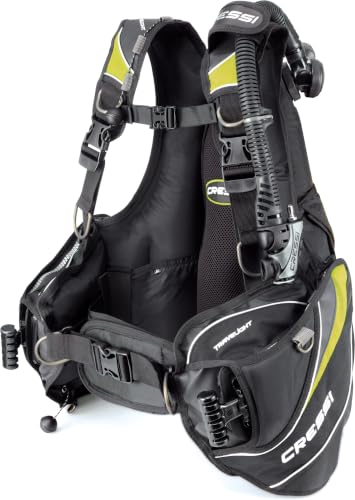
Cressi Travelight Jacket BCD
Around 5 lb of packed weight, which is real luggage allowance back. The trade is less padding and a smaller lift capacity than a full jacket.
Best for: Frequent flyers diving warm water
Skip it if: Cold water divers who need to carry a lot of lead in integrated pockets

Mares Bolt SLS BCD
Back inflation on a rigid backplate style harness with the Mares SLS weight release, which is one of the more positive weight pocket locks in the category.
Best for: Divers moving from a jacket toward a wing style setup

Aqua Lung Pro HD BCD
The heavy duty jacket that a lot of dive shops issue to staff, with a huge amount of D-ring and pocket real estate. Durable rather than light.
Best for: Divemasters, instructors, and anyone who dives every weekend

Oceanic Excursion BC with QLR4
A back inflate with a substantial lift capacity and four weight pockets, which matters if you dive a 7 mm suit and need to carry a lot of lead.
Best for: Cold water divers carrying heavy weighting

Aqua Lung Rogue Modular Back-Inflation BCD
A modular harness with ModLock connectors, so the shoulder and waist hardware come apart for packing and for swapping sizes. Back inflate with a proper weight release.
Best for: Divers who want a wing style fit that still packs flat
Skip it if: New divers who still want to float upright and hands free at the surface

Scubapro Hydros Pro Back-Inflation BCD
A moulded Monprene harness that absorbs no water at all, so it rinses in seconds and does not stink. Modular, and the single most travel friendly serious BCD made.
Best for: Divers who travel constantly and want one BCD for everything
Skip it if: Divers who fly with gear once a year, where the travel advantage never pays back
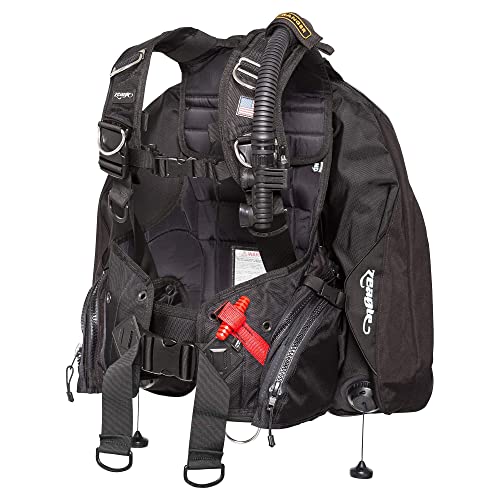
Zeagle Ranger BCD
A rebuildable harness with a very high lift capacity and the Ripcord weight release, which dumps every pocket in one pull. Heavy, indestructible, and a favourite of instructors.
Best for: Cold water, heavy weighting, and divers who keep gear for decades
Skip it if: Warm water travel divers, because it is heavy and eats luggage allowance
Specifications are the manufacturer's published figures, compared against verified owner reviews. Prices and stock change constantly, so confirm on the retailer page. Cards without a single listing link to a scoped search because that model is sold through dive shops. As an Amazon Associate we earn from qualifying purchases.
Jacket or back inflate: which style should you buy?
A jacket BCD wraps the bladder around your torso; a back inflate BCD puts all of it behind you. That one difference produces every other difference in this category.
The jacket, like the Cressi Start Pro 2.0 at under $500 or the Aqua Lung Pro HD at under $1,000, floats you upright at the surface with no effort at all, which is exactly what a nervous new diver wants while waiting for a boat. The costs are a slight squeeze around the ribs when the bladder is full and a tendency to hold you a little head up underwater, which encourages the feet down swimming position that wrecks air consumption and stirs silt.
Back inflation, as on the Mares Journey 3.0 and the Mares Bolt SLS at under $1,000, keeps the chest and sides completely clear and pushes you toward a flat horizontal trim. That position is more efficient, produces less drag and therefore uses less gas. At the surface it wants to tip you face forward until you learn to lean back into it, which takes about two dives.
Buy back inflation unless you have a specific reason not to. The habit it builds is worth more over a diving lifetime than the surface convenience of a jacket. If surface comfort is genuinely the priority, for example if you do long surface swims on shore dives, the jacket is not a mistake.
How much lift capacity do you actually need?
Lift is the maximum buoyancy the bladder can generate, quoted in pounds. Recreational BCDs run roughly 20 to 45 lb, and more is not better.
The number has to cover the buoyancy you lose during a dive, not your body weight. Two things change underwater. A wetsuit compresses, so a 7 mm suit that is strongly buoyant at the surface loses a large share of that at 60 feet. And an aluminium 80 swings roughly 6 lb from full to empty, going about 4 lb positive at 500 psi. The BCD has to be able to hold you comfortably at the surface at the start of the dive, with a full cylinder and a compressed suit, and that is the sizing case.
In practice: warm water, 3 mm suit, single aluminium 80, and 20 to 30 lb of lift is ample. Cold water, 7 mm suit with hood and gloves, a lot of lead, and you want 35 lb or more, which is why the Oceanic Excursion at under $1,000 with its four weight pockets and the Zeagle Ranger at under $1,000 exist. Excess lift is not a safety margin, it is a larger bladder creating more drag and more air to manage on every ascent.
How should you weight yourself, and how does the BCD change it?
Start from a percentage of body weight and then prove it in the water. A swimsuit or dive skin needs 0 to 2 lb, a 3 mm full suit 5 to 7 percent of body weight, a 5 mm full suit 8 to 10 percent, a 7 mm full suit with hood about 10 percent, and a drysuit with undergarment about 10 percent plus another 4 to 8 lb. Salt water needs more lead than fresh, by roughly 2.5 percent of total immersed weight. The scuba weight chart lays those percentages out by body weight from 120 to 280 lb.
Worked: a 180 lb diver in a 5 mm full suit starts at 14 to 18 lb of lead. That is a starting point for the first weight check, not an answer.
The weight check itself is done at the END of the dive, with a nearly empty cylinder, because an aluminium 80 goes positive as it empties. Empty the BCD completely, hold a normal breath, and float at eye level. You should sink slowly on the exhale. If you float high with lungs empty, you are underweighted for the end of the dive; if you sink like a stone with lungs full, you are carrying lead you do not need. Run the starting numbers through the weighting and buoyancy calculator before the trip and confirm them in water on the first dive.
Where the BCD comes in is distribution. Integrated pockets, as on almost everything on this page, put lead at the waist where it belongs. Trim pockets on the tank band, or a few soft weight bags at under $50 moved higher, fix a feet down attitude that no amount of total weight adjustment will solve. If your BCD has no integrated system, an XS Scuba 4 pocket weight belt at under $100 is more comfortable than threaded hard blocks and lets you move lead in small increments.
| BCD | Price | Style | Weight system | Travel weight | Best environment |
|---|---|---|---|---|---|
| Cressi Start Pro 2.0 | Under $500 | Jacket | Integrated | Standard | Warm water, first BCD |
| Mares Journey 3.0 | Under $500 | Back inflate | Integrated | Light | Travel and warm water |
| Cressi Travelight | Under $1,000 | Jacket | Integrated | About 5 lb | Frequent flying |
| Mares Bolt SLS | Under $1,000 | Back inflate | SLS integrated | Standard | Moving toward a wing |
| Aqua Lung Pro HD | Under $1,000 | Jacket | SureLock integrated | Heavy | Daily and professional use |
| Oceanic Excursion | Under $1,000 | Back inflate | 4 pockets | Heavy | Cold water, heavy lead |
| Aqua Lung Rogue | Under $1,000 | Back inflate | Integrated | Light, modular | Travel with a wing style fit |
| Scubapro Hydros Pro | Under $1,000 | Back inflate | Integrated | Light, no water uptake | Constant travel |
| Zeagle Ranger | Under $1,000 | Back inflate | Ripcord | Heavy | Cold water, decades of use |
Style, weight system and lift class are the manufacturers' published figures. Travel weight is a relative description rather than a specification, so check the current listing for the exact figure in the size you need.
Why does packed weight matter so much?
Because a BCD is the single heaviest item in a dive bag after the regulator and the suit, and airline allowance is finite. A conventional padded jacket can run 8 to 10 lb dry and considerably more once wet.
The Cressi Travelight at under $1,000 gets down to around 5 lb packed, which is a genuine chunk of a 23 kg allowance back. The trade is exactly what you would expect: less padding, a smaller bladder, fewer D-rings. It is a warm water travel BCD and it does not pretend otherwise.
The Scubapro Hydros Pro at under $1,000 solves the problem differently. Its harness is moulded Monprene rather than padded nylon, which absorbs no water at all. A soaked nylon BCD can gain several pounds of water weight and takes a day to dry; the Hydros rinses and drips dry in minutes, and it does not develop the smell that lives in a wet padded jacket. That is the actual argument for spending up to $800 more than the Journey 3.0, and it only pays back if you fly with gear often.
Whatever you buy, it needs a bag that drains. A mesh pack like the ones in the dive bag roundup is the correct answer for local diving, because a wet BCD sealed in a closed bag is how mildew starts.
What details separate a good BCD from a cheap one?
The weight release. This is the mechanism you will use in an emergency, in gloves, without looking. The Mares SLS lock and the Zeagle Ripcord, which dumps every pocket in one pull, are the two most positive systems in the category. Velcro only pockets are the ones that come loose on a ladder.
The dump valves. You want at least two beyond the inflator: a right shoulder pull dump and a lower rear dump. Venting from the lowest point when horizontal is what lets you descend without going vertical, and a BCD with only one dump forces you to change body position to control buoyancy.
The cummerbund and waist buckle. A wide cummerbund spreads load and stops the rig riding up. Test it with the cylinder mounted, because a BCD that fits empty can slide when 35 lb of aluminium and gas hangs off the back.
The tank band. A slipping cylinder is the most alarming failure that happens on a boat deck. Stainless hardware, as on the XS Scuba Highland tank bands at under $100, is the fix on an older rig, and any band should be soaked before you cinch it because dry webbing stretches when wet.
D-rings and pockets. You need somewhere to clip a surface marker buoy at under $25 and somewhere to put a spare mask. Professional oriented jackets like the Pro HD have far more of both, which is most of what the extra money buys.
How does a BCD affect your gas consumption?
Substantially, through drag and through overweighting. A diver carrying 6 lb more lead than they need carries 6 lb more air in the bladder to offset it, which is a larger, draggier shape moving through water, and it makes every buoyancy change slower and more exaggerated.
The compounding is what surprises people. Consumption scales with ambient pressure, so at 66 feet you are breathing three times your surface rate. Anything that raises your surface rate by a quarter costs you three quarters of that at depth. Getting weighting and trim right is worth more bottom time than any regulator upgrade. Measure the effect yourself with the SAC rate calculator before and after you fix your weighting, and note that a psi per minute figure is only valid for the cylinder it was measured in.
Who should not buy the expert tier?
Skip the Scubapro Hydros Pro at under $1,000 if you dive locally and fly with gear once a year or less. Its advantages are travel weight, water uptake and modularity, and none of those changes a single dive for someone loading a car boot on a weekend. Spending up to $800 more than the Journey 3.0 buys you convenience at an airport check in desk.
Skip the Zeagle Ranger at under $1,000 if you dive warm water and travel. It is heavy, it is built to be rebuilt over decades, and it is aimed at cold water divers carrying serious lead. Paying up to $500 more to fly a heavier bag around the Caribbean is the wrong trade.
Skip the Aqua Lung Rogue at under $1,000 if you are newly certified and still want a hands free upright float while you wait for the boat. The modular wing style fit is excellent and it assumes a diver who is already comfortable in the water.
A diver in their first fifty dives should buy the Journey 3.0 or the Start Pro and put the difference into a dive computer and a wetsuit that actually fits. Fit and trim decide how diving feels; harness materials do not. See how the whole kit prices up in the intermediate scuba setup.
Buying tips
- Try it on with a cylinder mounted. A BCD that fits in a shop with an empty back can slide badly with 35 lb hanging off it.
- Check integrated pocket capacity against the lead you actually carry. Some travel BCDs cap out well below what a 7 mm suit demands.
- Count the dump valves. Two beyond the inflator is the working minimum.
- Soak the tank band before the first dive and re-cinch it. Dry webbing stretches when wet, which is exactly when the cylinder starts to move.
- Rinse the inside of the bladder occasionally. Salt water gets in through the dumps, and a bladder that is never flushed grows a crust that eventually jams a valve.
- Do not buy for the lift number. Buy for fit, weight system and dump placement, then confirm the lift is adequate for your suit and cylinder.
Deciding on a specific model? We review the Mares Journey 3.0 back-inflation BCD review and Cressi Solid jacket-style BCD review in full.
Frequently asked questions
What is the best BCD for most divers?
The Mares Journey 3.0 at under $500 is the best BCD for most divers. It is a light back inflation design with integrated weight pockets that packs down for travel, and back inflation trims flatter in the water than a jacket, which is a habit worth building early. If you want the conventional jacket feel and an upright float at the surface, the Cressi Start Pro 2.0 at under $500 is the same money.
What is the difference between a jacket and a back inflate BCD?
A jacket BCD wraps the air bladder around your sides and back, so it squeezes slightly when full and floats you upright at the surface. A back inflate BCD puts the whole bladder behind you, which keeps your chest clear and trims you flatter underwater but tends to push your face forward at the surface until you learn to lean back. Back inflate is the better swimming position; jacket is the easier surface position.
How much lift capacity does a BCD need?
Lift is the buoyancy the bladder can generate, and recreational BCDs run roughly 20 to 45 lb. Warm water divers in a 3 mm suit with a single aluminium 80 are well served by 20 to 30 lb. Cold water divers in a 7 mm suit carrying a lot of lead want 35 lb or more, because the suit itself loses several pounds of buoyancy at depth. Excess lift is dead weight and drag, not a safety margin.
Are integrated weights better than a weight belt?
Integrated weights are more comfortable and keep lead off your hips, which matters on long dives and on ladders. A weight belt is cheaper, works with any BCD, and can be ditched independently of the rig. Many divers run both, splitting lead between integrated pockets and trim pockets to fix body position rather than just total weight. Whatever you use, practise the release with gloves on before you need it.
How do I know what size BCD to buy?
Manufacturer sizing runs by torso length and chest measurement rather than by shirt size, and it is not consistent between brands. The critical check is that the cummerbund and waist strap close firmly with the tank on and the bladder empty, and that the shoulders do not ride up when the bladder is full. If you can only try one item of dive gear on before buying, make it the BCD.
Should I buy a BCD or a backplate and wing?
A backplate and wing is a modular alternative: a metal or plastic plate, a harness and a separate bladder. It trims beautifully, lasts effectively forever and is what most technical divers use, but it has no surface float position built in and it is less forgiving for a new diver. Buy a conventional BCD first unless you already know you are heading into technical or cave training.
What is the best wing BCD?
For technical and cave diving the answer is a backplate and wing rather than a jacket: a metal or plastic plate, a harness and a separate bladder that trims flat and lasts effectively forever. It has no built-in surface float position and is less forgiving for a new diver, so most recreational divers are better served by the Mares Journey 3.0 back inflate BCD at under $500 until they start technical training.
Is there a hybrid BCD between a jacket and a wing?
Back inflate BCDs like the Mares Journey 3.0 are the usual middle ground: the bladder sits behind the diver like a wing, which gives flatter trim, but the harness, integrated weight pockets and surface float behaviour stay close to a conventional jacket.
How we choose: we compare published manufacturer specifications, published training agency standards, and verified owner reviews across retailers. We do not test gear in person, and every depth rating, cylinder capacity and algorithm name quoted here is the manufacturer's published figure unless we say otherwise, so confirm it on the current spec sheet before you buy. Nothing here is dive instruction, and no calculator output on this site is a dive plan. Scuba diving carries a real risk of decompression sickness, oxygen toxicity, barotrauma and drowning. Dive within the limits of your certification, verify every plan with your own computer, and buy the training before the gear that assumes it.