Best Scuba Gear Bag in 2026
The AKONA Azul 65L Mesh Backpack at $64.95 is the best scuba gear bag for most divers: 65 litres holds a complete personal kit minus the cylinder, the mesh drains and dries between dives, and it carries on your back up a boat ladder. Divers who fly a few times a year should add a wheeled bag such as the Scubapro Sport Mesh N Roll 100 at $159.
A dive bag is the least glamorous purchase in the sport and the one most divers get wrong twice before getting right. The two decisions that matter are whether it drains and whether you have to carry it, and almost every other feature follows from those. For most divers the answer is the AKONA Azul 65L Mesh Backpack at $64.95, which holds a complete personal kit and dries between dives instead of fermenting.
A dive bag is a container sized around wet, heavy, awkwardly shaped equipment that has just come out of salt water. That is a genuinely different design problem from luggage: the contents weigh 30 pounds or more, they are soaked, they contain metal that corrodes, and they have to be moved from a car to a boat deck to a ladder, often one handed, often on a wet surface. Ordinary luggage fails at all four.
Best scuba gear bags by experience level

XS Scuba Mesh Fin Backpack
A mesh backpack sized for fins, mask and a wet suit. Mesh is the right answer for local diving because wet gear that cannot drain will grow things.
Best for: Shore diving and local boat trips

AKONA Azul 65L Mesh Backpack
65 litres with a full top zip, which is enough for a complete set of gear minus the tank. Drains and dries between dives, and carries on your back up a boat ladder.
Best for: A complete local dive kit in one bag

Scubapro Sport Mesh 'N Roll 100 Wheeled Dive Bag
Wheels plus mesh, so it survives a wet boat deck and still rolls through an airport. The compromise bag if you only want to own one.
Best for: Divers who travel a few times a year

Cressi Moby 5 Roller Dive Bag
A long running roller sized to swallow a full set of gear including a regulator and a BCD, with a separate fin compartment. Heavy when empty, which costs you allowance.
Best for: One bag dive travel
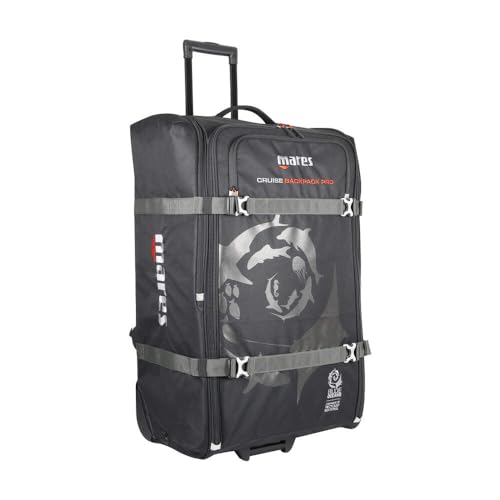
Mares Cruise Backpack Pro Dive Bag
A wheeled bag with backpack straps, for the trips where the last mile is a jetty rather than a kerb. Expensive, and the only format that solves that specific problem.
Best for: Liveaboards and destinations with awkward transfers
Skip it if: Divers who load a car boot at a local site, where wheels and backpack straps solve nothing

Stahlsac Steel 34 Dive Bag
The bag dive professionals buy when they have destroyed two cheaper ones. Overbuilt zips and fabric, priced like luggage rather than dive gear.
Best for: Working divers and anyone who flies with gear monthly
Skip it if: Anyone flying with gear less than a few times a year, because durability is priced like luggage here
Specifications are the manufacturer's published figures, compared against verified owner reviews. Prices and stock change constantly, so confirm on the retailer page. Cards without a single listing link to a scoped search because that model is sold through dive shops. As an Amazon Associate we earn from qualifying purchases.
Mesh or roller: which dive bag do you actually need?
Mesh drains, rollers protect. Everything else in this category is a variation on that trade.
Mesh is the correct answer for local diving, for boat days and for anywhere the gear goes back in the bag wet. Wet gear sealed in a solid bag smells within a day, and mildew in the lining of a BCD or the inside of a wetsuit is close to permanent once it takes hold. The XS Scuba Mesh Fin Backpack at $27.03 is enough for fins, mask and a thin suit, and the AKONA Azul 65L at $64.95 steps up to a complete kit with a full top zip so you are not excavating for a mask at the bottom.
A roller is what you want the moment an airport enters the picture. Baggage handlers do not care what is inside, and a 40 pound bag over a shoulder across a terminal is a genuinely unpleasant experience twice per trip. The Cressi Moby 5 at $249.95 swallows a full kit including regulator and BCD with a separate fin compartment, and it is heavy empty, which is the cost of the wheels and the structure.
The hybrid, a wheeled bag with mesh panels like the Scubapro Sport Mesh N Roll 100 at $159, is the compromise for divers who only want to own one bag. It survives a wet boat deck and still rolls through a terminal. It is less protective than a solid roller and less breathable than a pure mesh bag, and that is exactly what a compromise means. $94.05 over the Azul is a reasonable price for owning one bag instead of two.
The two bag plan is worth considering on its own terms: an Azul plus a Mesh N Roll costs $223.95 and lets the mesh bag ride inside the roller on travel days, then come out as the boat bag once you arrive. Most divers who fly regularly end up here.
How big does a dive bag need to be?
Around 65 litres holds mask, snorkel, fins, boots, a wetsuit, a regulator and a BCD: a complete set of personal gear minus the cylinder and the lead, which you rent or borrow anyway. Below roughly 50 litres you start leaving the BCD or the suit behind.
Above roughly 100 litres a different problem appears. Volume is almost never the binding constraint on a flight; weight is. A bag large enough to hold everything you own will encourage you to pack everything you own, and then cost you an excess baggage fee at the desk.
A representative full kit runs about 30 lb: roughly 7 lb of BCD, 6 lb of regulator and gauges, 8 lb of wetsuit, 5 lb of fins and boots, and 4 lb of mask, computer, light and accessories. Against a 50 lb checked allowance that leaves about 20 lb of headroom for the bag itself and for anything you actually wear on land, which is why an empty bag weighing 12 lb is a real problem and why travel specific BCDs and light fins exist at all. Those exact figures vary by size and model, so weigh your own kit on a bathroom scale before you book anything.
| Bag | Price | Type | Carry | Drains | Best for |
|---|---|---|---|---|---|
| XS Scuba Mesh Fin Backpack | $27.03 | Mesh | Backpack | Yes | Fins, mask, thin suit |
| AKONA Azul 65L | $64.95 | Mesh | Backpack | Yes | A full local kit in one bag |
| Scubapro Sport Mesh N Roll 100 | $159 | Hybrid | Wheels | Partly | Owning only one bag |
| Cressi Moby 5 | $249.95 | Roller | Wheels | No | One bag dive travel |
| Mares Cruise Backpack Pro | $359.95 | Roller | Wheels and straps | No | Liveaboards, awkward transfers |
| Stahlsac Steel 34 | $425.95 | Roller | Wheels | No | Working divers, monthly flying |
Type, carry method and capacity are the manufacturers' published descriptions. Drainage is a property of the material rather than a specification, and empty weights differ enough between sizes that you should check the current listing for the exact configuration you want.
How do you pack a dive bag for a flight?
Regulator and dive computer go in your carry on. The regulator is the most expensive fragile object in the kit, a cracked first stage body or a bent hose fitting is not repairable at a remote destination, and it weighs almost nothing against a cabin allowance. The computer goes with it for the same reason.
In the hold, the wetsuit is the packing material. Lay it flat across the bottom, put the BCD on top of it, and pack fins along the sides where they act as a frame. A save a dive kit at $119.95 belongs in the hold bag, and it is the difference between a broken mask strap costing you ten minutes and costing you a dive day.
Anything with a blade, including a line cutter, goes in checked baggage without exception, and it is worth checking destination rules before you travel because some jurisdictions restrict knife carriage entirely. The dive travel packing guide covers the full sequence, including cylinders, which almost never travel.
Does flying after diving change how you plan the trip?
Yes, and it belongs in the packing conversation because it decides which day the bag gets closed. Divers Alert Network guidance suggests a minimum preflight surface interval of about 12 hours after a single no decompression dive and about 18 hours after multiple dives or several days of diving, with longer still after any dive that required decompression stops.
Those are minimums rather than targets, and they exist because cabin pressure at cruising altitude is materially lower than sea level pressure, which increases the pressure gradient driving dissolved inert gas out of your tissues. Your own computer, your training agency and your specific profile take precedence over any general figure, and your computer will usually display a no fly countdown of its own.
In practice, plan the last dive day to end a full day before the flight. That single decision costs one dive and removes an entire category of risk, and it also gives your gear a day to dry before it goes into a sealed bag.
How do you keep gear from rotting inside the bag?
Rinse before it goes in, dry before it gets stored, and unpack the day you get home. That is genuinely the whole method, and the failure mode is always the same: a bag left in a car boot after a weekend, opened the following Friday.
Salt is the mechanism. As sea water evaporates it leaves crystals that abrade zips, seize buckles and eat aluminium hardware, and the inside of a BCD bladder is where this does the most damage because nobody sees it. Rinse the bag itself as well as the gear, particularly a mesh bag that has been sitting on a salty deck all day.
Zips deserve a specific mention, because they are what actually fails on a dive bag. A large plastic coil zip carrying 40 lb of wet gear takes more load than any zip on ordinary luggage, and salt crystals grind the coil every time it runs. Rinse the zip, run it fully open and closed under fresh water, and treat it once a season with a paraffin based zip lubricant. A bag with a dead zip is a pile of fabric.
Store the bag open and empty. A zipped bag with a damp corner is a culture dish, and the smell that develops transfers to everything you subsequently put in it. The scuba gear maintenance guide covers rinse procedure for regulators, BCD bladders and neoprene in detail, including the parts that need fresh water pushed through them rather than merely poured over them.
What should live in the bag permanently?
A dive bag is also a kit list, and the items that stay in it are the ones that save dives. Four are worth their space on every trip.
A save a dive kit at $119.95 holds o rings, mouthpieces, zip ties, mask straps and the tools to fit them. A snapped mask strap or a blown o ring on a boat is a ten minute delay with one and a lost dive without one, and the kit pays for itself the first time somebody else on the boat needs it.
A surface marker buoy at $24.29 and a finger spool at $18.98 belong in a BCD pocket rather than the bag, but they start in the bag. A marker without a spool only works at the surface, which is the moment you least need it, and deploying one from depth is a trained skill worth learning before you are drifting away from a boat.
A folding wrist slate at $37.95 is where the dive plan actually lives: depths, turn pressure, headings and the surface interval, written down before you get in, in a place you can read at depth. And a logbook at $39.92 matters more than divers expect, because operators ask to see logged dives before taking anyone on a demanding charter and a signed paper log still carries more weight than an app export.
Who should not buy the expert tier?
Skip the Mares Cruise Backpack Pro at $359.95 unless your trips end with a walk that wheels cannot do. Its whole argument is that it is a roller with backpack straps, which solves the jetty, the beach path and the liveaboard tender. If your last mile is a kerb and a hotel lobby, $295.00 over the Azul buys you straps you will never unclip.
Skip the Stahlsac Steel 34 at $425.95 unless you fly with gear most months or dive professionally. It is built to survive handling that destroys ordinary bags, and that durability is priced like luggage rather than like dive gear. $361.00 over the Azul is the right call for a divemaster and the wrong call for someone who takes one dive holiday a year.
A diver who mostly dives locally should buy the mesh backpack, spend nothing else in this category, and put the difference into gear that changes the dive itself. See what that money does in the wetsuit roundup and the BCD roundup, or price a whole kit in the expert scuba setup.
Buying tips
- Weigh the bag empty before you buy. A 12 lb empty roller is a quarter of a checked allowance gone before you pack anything.
- Insist on a full top opening. A narrow top loader means unpacking everything to reach the mask at the bottom.
- Check the wheels, not the fabric. Wheels and their housings are what fail first on dive rollers, and they are what nobody inspects in a shop.
- Buy the mesh bag even if you buy a roller. It rides inside on the flight and becomes the boat bag on arrival.
- Put your name on the outside and inside. Every mesh bag on a boat deck looks the same at the end of a dive day.
- Never store gear in the bag. Hang the suit, hang the BCD partly inflated, and leave the bag open and empty.
Deciding on a specific model? We review the Rosemont Scuba Ultimate Save-A-Dive Kit review and AKONA Azul 65L mesh backpack review in full.
Frequently asked questions
What is the best scuba gear bag for most divers?
The AKONA Azul 65L Mesh Backpack at $64.95 is the best bag for most divers. Sixty five litres swallows a full set of personal gear minus the cylinder, the full top zip means you are not fishing for a mask at the bottom, and mesh drains and dries between dives instead of growing mildew. It carries on your back, which matters on a boat ladder and on a long walk to a shore entry.
Should a dive bag be mesh or solid?
Mesh for local diving and boat days, solid for flying. Wet gear sealed in a solid bag will smell within a day and grow mildew within a week, and mesh solves that by draining and breathing. A solid bag protects gear from baggage handlers and keeps a wet suit away from clothes, which is why many divers own one of each and pack the mesh bag inside the roller.
How big does a dive bag need to be?
Around 65 litres holds mask, snorkel, fins, boots, a wetsuit, a regulator and a BCD, which is a complete personal kit minus the cylinder and weights. Below about 50 litres you will be leaving the BCD or the suit behind. Above about 100 litres the bag encourages you to fill it and then exceed the airline weight limit, since volume is rarely the binding constraint on a flight.
Should I carry my regulator on the plane?
Yes. A regulator is the most expensive fragile item in the kit, it is not replaceable at short notice in a remote destination, and a dropped hold bag can crack a first stage body or bend a hose fitting. It fits easily in a carry on. A dive computer belongs in carry on for the same reasons. Everything else can go in the hold, since a wetsuit is very difficult for anyone to damage.
How long should I wait after diving before flying?
Divers Alert Network guidance suggests a minimum preflight surface interval of about 12 hours after a single no decompression dive and about 18 hours after multiple dives or multiple days of diving, with longer intervals for dives that required decompression stops. These are minimums, not targets. Your own computer, your agency training and your dive profile take precedence, and building a spare day into the trip is cheap insurance.
How do I stop my dive bag from smelling?
Rinse gear in fresh water before it goes in, never store anything damp, and empty the bag the day you get home rather than the weekend after. Mesh bags dry if you hang them open. Solid bags need to be opened and turned inside out. A rinsed and dried bag with a wetsuit cleaner run through the suit occasionally will not develop the smell that a sealed wet bag develops in one weekend.
How we choose: we compare published manufacturer specifications, published training agency standards, and verified owner reviews across retailers. We do not test gear in person, and every depth rating, cylinder capacity and algorithm name quoted here is the manufacturer's published figure unless we say otherwise, so confirm it on the current spec sheet before you buy. Nothing here is dive instruction, and no calculator output on this site is a dive plan. Scuba diving carries a real risk of decompression sickness, oxygen toxicity, barotrauma and drowning. Dive within the limits of your certification, verify every plan with your own computer, and buy the training before the gear that assumes it.
Logging your own SAC rate and gas plans? The Dive Kit & Air Planning Workbook is the paid version of these pages: 8 printable worksheets you fill in with your own numbers, plus the full PDF, $29.